

Thoughts from Fr. Jeremy

When I was younger, once or twice a week my parents and I would take time out of our hectic and stressful D.C. lives and watch tv together. They were the rare moments when all the things that didn’t go right with life melted away. A famous escape of ours was the show "Seinfeld," — one of the most acclaimed sitcoms of all time. Its finale was watched by 76.3 million people — the fourth highest in television history. In it, the characters witness someone getting car-jacked at gunpoint and rather than help they are recorded making fun of it. They’re then subsequently arrested for violated the “Good Samaritan law” of the small town they happen to be visiting. The ensuing court case brings in nine-seasons of characters, all testifying to the narcissistic and selfish nature of these four friends, ultimately landing them in jail. Its satiric humor was oddly sobering. Just five years earlier, the National Holocaust Memorial opened. I remember going for the first time and reading the inscription on its stone monument at the museum’s entrance. It was a 1946 post-war confession by a German Lutheran Pastor, Martin Niemoller. “First they came for the Communists and I did not speak out because I was not a Communist. Then they came for the Socialists and I did not speak out because I was not a Socialist. Then they came for the trade unionists and I did not speak out because I was not a trade unionist. Then they came for the Jews and I did not speak out because I was not a Jew. Then they came for me and there was no one left to speak out for me.” As a child I didn’t know what communists, trade unionists, and socialists were. But I understood Niemoller’s confession. It wasn’t my problem, until it was. It wasn’t too late, until it was. My Detroit born-and-raised Jewish father, the son of a grocery-store employee, made sure to teach me that it was Jewish lawyers who stood with their Black brothers and sisters in the Civil Rights movement. In college, I remember participating in the national holocaust memorial day activity of reading names of the deceased. For 20 hours students, alumni, staff and faculty read the names of those killed by the Nazis. And during seminary in Church History, I was taught that it was the members of the Early Church that rescued babies abandoned on the Roman walls. From spiritual wisdom to scripted television, we know what the universe begs of us. It wants us to see each other as more than just strangers. Whether you call it sin or selfishness, from international tragedies to violent domestic antisemitism, we are all witnesses to ‘Good Samaritan’ failures. We cannot pretend we don’t see ridicule, harassment, and hate. As a child I wondered if I had the strength to stand up like Dietrich Bonhoffer and Martin Niemoller. As an Episcopal priest I wonder if I would be willing to die for my faith like Saints Peter and Paul. What I know, is that when I visit the hospital, I see nurses caring for the sick. When I perform funerals, I see families and friends mourn the loss of a loved one. I don’t know any of their backgrounds, beliefs or voting preferences. I just see good people standing with other good people who are hurting. I see God’s teaching living out in one another. Even if Good Samaritan laws aren’t real, their lesson about human survival is. If we aren’t there for the survival of each other, then there won’t be anyone to be there for us.

I freely admit that I am a difficult person to buy presents for. I wish it weren’t true, but I’ve even returned gifts given to me by the closest of family members. The small consolation that I feel is that I am not alone in this sad truth. According to the National Retail Federation, 17% of all goods sold during the winter holidays will be returned—that’s roughly $900 billion worth. But why? Are we a fickle people or is there something more profound at play? There is an undeniable intersection when a gift has both relational value and a unique poignancy to us. I cherish the bible given to me by the bishop who ordained me a priest. My husband fiercely protects the porcelain Christmas tree that belonged to his great grandmother. My fraternity brother’s daughter still goes to bed every night with the same Vermont Teddy Bear we got her a few Christmases ago. The right gift has the ability to convey something more meaningful than its monetized retail value. It can connect how we are seen by others with how we hope to see ourselves. Admittedly, most gifts can’t do that—which is why if they aren’t immediately useful they get returned. We know we shouldn’t equate gifts with love but it’s also impossible to deny the pure joy seen on a person’s face when you surprise them with a gift. The biggest mistake however is to assume that all gifts are material or fungible. I would argue that the most important part of a gift is its intangible value and that cannot be transferred. The bible I own isn’t a particularly unique translation and the book itself is not a first edition. It is however an artfully and intellectually well translated bible given by the bishop who consecrated me a priest on the day of that consecration, sacramentality intersecting with personal accomplishment. For Brendan, we actually own two porcelain Christmas Trees, but he can easily tell the difference between the two. In addition to their subtle differences based on decades of difference in age, the older one carries with it an heirloom sentimental value. And for Silvy, every young child yearns to feel safe at night, assured by being able to grasp onto something dependable when sleeping alone. As we journey into this next year around the sun, I wonder if we are also present to all the intangible yet equally important gifts we give each other all the time. For as much as we give physical objects, we also gift to one another every time we interact with another human being. Whether or not you believe that the very image of God is present in every life, every time we interact with another person we gift; we communicate our understanding of them and it directly engages with their own self-perceptions. All the ways we engage with one another are our behavioral gifts demonstrating how important we see another person’s life to be. As you ponder how you want to live your life in 2025, I invite you to remember that unlike a material good, your interactions cannot be taken back.

This Thanksgiving I had the rare opportunity to celebrate the holiday with my family back in Washington, D.C. Once there, there were two things I couldn’t miss: the Smithsonian exhibit on Impressionism and the Winter Holiday Market. Nestled in front of the National Portrait Gallery are over 30 vendors of various creative arts, from watercolor cityscapes and photography to the ‘all things smores’ food vendor. It should have been heaven and if it had been a Hallmark movie it would have been perfect. Sadly, real life is nothing like a Hallmark movie and it was chaos. I didn’t notice it in the moment but once I was free from the mayhem and able to reflect, I realized even crammed all together everyone just seemed to look past each other as they bobbed and weaved to make their ways through. The whole experience made me wonder, why is it so easy to forget a person’s humanity in a crowd. Whether you’re at the giant Holiday Market in Chicago, the Macys in Albany, or just browsing Northshire Bookstore during busy tourist days, it’s easy to feel overwhelmed and swallowed up by the sheer volume of people. I can’t imagine it’s that enjoyable for the employees either. I remember working at a café, and sure I loved busy times because the day would just fly by, but at a certain point you lose yourself in the mayhem. If holiday markets are supposed to scratch that itch for festive joy and boutique craftiness while buying gifts for others, the social angst of being squished between shopped certainly ruins that experience. Why am I making such a big deal about it? Because shopping at holiday markets perfectly illustrates the Dr. Jekeil & Mr. Hyde parts of the human psyche. You don’t have to be anthropologist or clinical psychologist to recognize that there is genuine enjoyment in buying a gift for someone that you know they’ll love. It feels good to bring joy to others. But don’t get in a person’s way on their path to do it less you get squished and moshed in the process. When you’re out holiday shopping this year, do you look at the vast crowds of people you walk past? Do you take in the beauty that is the communal experience of the dozens—if not hundreds—of people all around you also on a journey to give and gift for others in their lives? Or do you tune them out as just another obstacle to get through? Do you forget that all those lives hurrying around you are also caring and loving souls? I fully confess my own guilt in perpetuating this sin for which we all succumb. At the DC Holiday Market I just couldn’t wait to get past all the people cramming their ways through the crowd. But whether you’re a person connected to a faith community or not, we humans are a communal people who together can be an unstoppable force for good in the world. When we stop seeing the humanity in the crowd, we inch closer and closer to losing the best part of ourselves. Whether you get 50% off, 30% off, or pay full price for your holiday gifts this year, I hope you remember just how uniquely precious you are and how uniquely precious those people in your way are too.

“Seek the Lord and His strength; Seek His face continually [longing to be in His presence]” (1st Chronicles 16:11, the Amplified Bible)
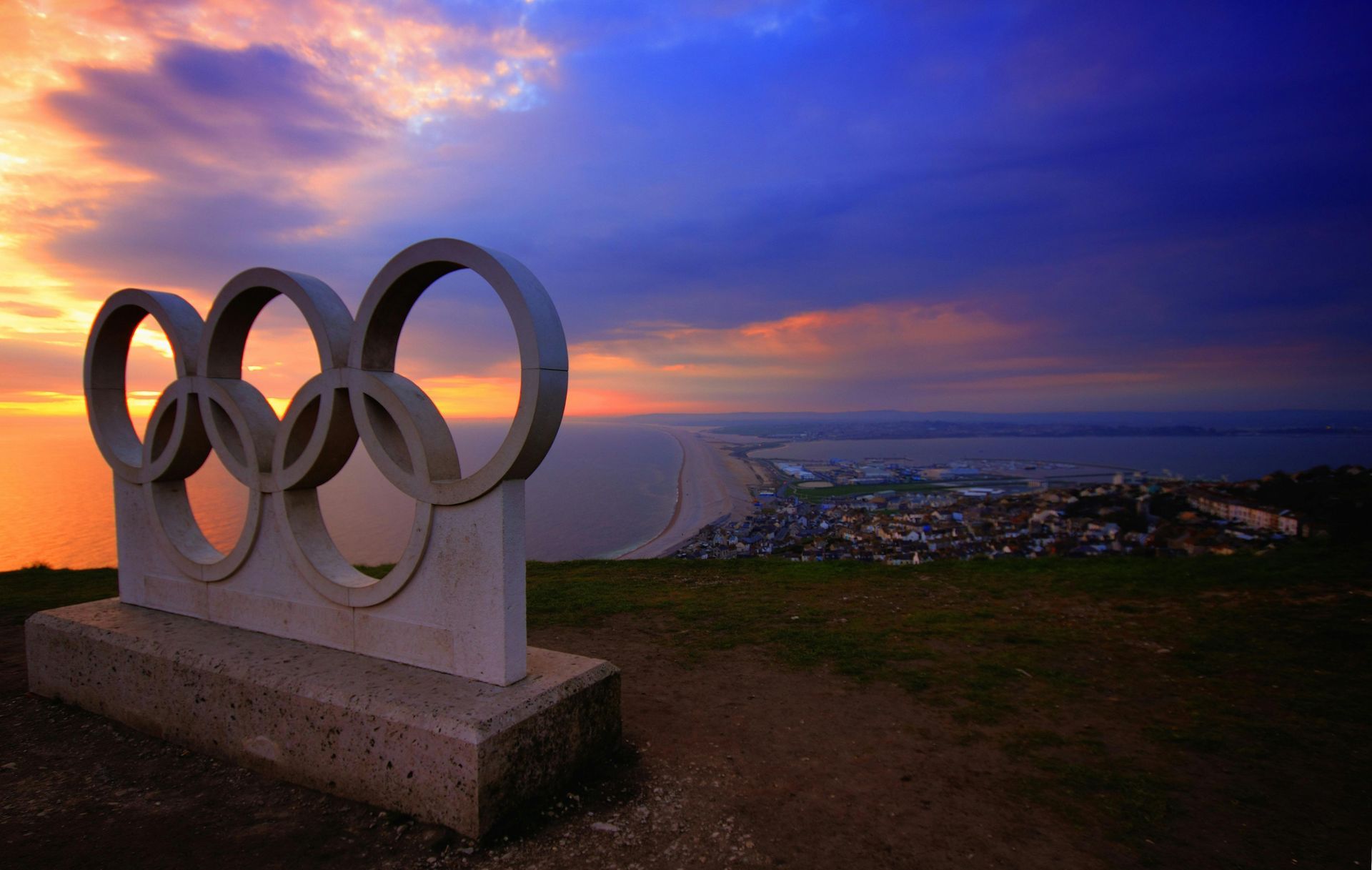
By the end of the 2016 games, Michael Phelps had won 28 medals, 23 of them gold, making him the most successful Olympic athlete of all time. In 1936, African American Jesse Owens single-handedly crushed Hitler’s “myth” of Aryan supremacy by being the most successful athlete at the Berlin games. During the 2020 games wunderkind gymnast Simone Biles tore down stigmas against mental health and wellness. Michael’s victory was our victory. Jesse’s victory was our victory. Simone’s victory was our victory. If you’ve seen her recent documentary, “I am,” you knew that Céline Dion has a debilitating neurological disease. And yet, she trained hard and delivered a powerful and emotive performance to open this year’s summer games. The Olympics has the power to inspire all of us to personal gold medals. In regrettable contrast, I’m sure we’ve all seen our fair share of R-rated political posters aimed more at tearing each other down then inspiring us to unite. If I had my way, we would move the presidential election cycle to the year before the Summer Olympics in hopes the games would heal the divisions which always seem to ignite with every election season. Every four years—two when we include the Winter Olympics—we find ways to come together to support each other. We find ourselves on the same side, not united against someone else because, well frankly, there are too many other countries and teams to be united against, and so we are just united. We cheer on the best of us because they inspire the best in us. Psychologists and sociologists overwhelmingly agree that we all need some form of companionship and community. We live in packs, and we congregate in communities—even though our four-legged friends seem easier to live with. Whether you’re tied to a specific faith community, spiritual but not religious, or religiously tied to secular life, all humans are communal. Sometimes those communities are small and sometimes those communities are large, but there’s a reason Jesus said, “when two or three are gathered, I am there.” There is a reason why there’s an Olympic Village.” There’s a reason why the Marines motto is Semper Fi. We thrive with each other. If the Olympics are meant to remind us of anything, it’s that we are more meant to unite than divide, to inspire rather than tear down, and to break barriers rather than create them. Our daily lives and daily behaviors should be a daily striving for personal gold medals—maybe not in the 100-meter dash or the 10-meter-high dive, but in how we treat each other. We should cheer each other on and share in our successes. Gold medalists inspire. They tear down divides, and they are fiercely loyal. So as the summer games come to a close and the elections get into higher gear, I guess my only question to you is…will you go for the gold with me?

I think at one point or another, each of us feels like we live on a NASCAR racetrack. I live near a Stewarts and can hear cars peeling down 7A. I’m sure the same can be said for those who live on the border of Shaftsbury and Bennington, or on Main St. in Bennington, or on routes 30 and 11 up north. It’s so bothersome that I wish I could just go out there and build my own speed bump out of gravel and tar and whatever else you build a speed bump out of. Sadly, I remember that snowplows would destroy them, and my Select Board would have a heart attack. A deep frustration with the world’s current issues—whether they be neighborhood focused or globally focused can get under our skin and eat away at the one thing prevalent in all human psyches: the need to feel like we are in control. Note, I didn’t say the need to be in control only to feel like we are in control. It’s hard not to think about how much we wish things would change and wonder if we could just fix them on our own or if they’ll ever change at all. Therapists and spiritual counselors alike will attest that one of the biggest challenges to emotional well-being is an instinctive fear that the big hungry animal is going to jump out of the forest and eat us alive—in other words that we will not be able to control and thus stop harm from coming towards us. While humans have evolved beyond that specific fear, that need to control the circumstances that surround us shows up in all our lives. When we feel out of control it raises our blood pressure, our anxieties, and our defense mechanisms. Sure, I totally wish I could build a speed bump and stop those speed-racers peeling down my street but what I wish more is that I knew how best to handle such challenges without trying to control everything. I’m not advocating acceptance of the circumstances life gives us. A car careening down the road is a danger and needs to be addressed. Particularly as we live in a world plagued by struggles and uncertainties both local and global, how do you find the strength to approach them with hope, courage, and resolve? Whether you’re spiritual but not religious, tied to a specific faith tradition, or religiously tied to secular life we all need to feel like we can trust the world around us to not jump out of the forest and eat us alive. The reality is that I don’t even have the skills to build a speed bump if I wanted to, but in an age of news cycles that won’t stop and relentless internet opinions, I need my body to normalize a confidence to handle whatever life may throw my way. For me, that’s my faith and God. For you it may be something else. Whatever it is, may it allow you to practice trusting in and giving control over because when you can do that, then you really are in control of your life.